
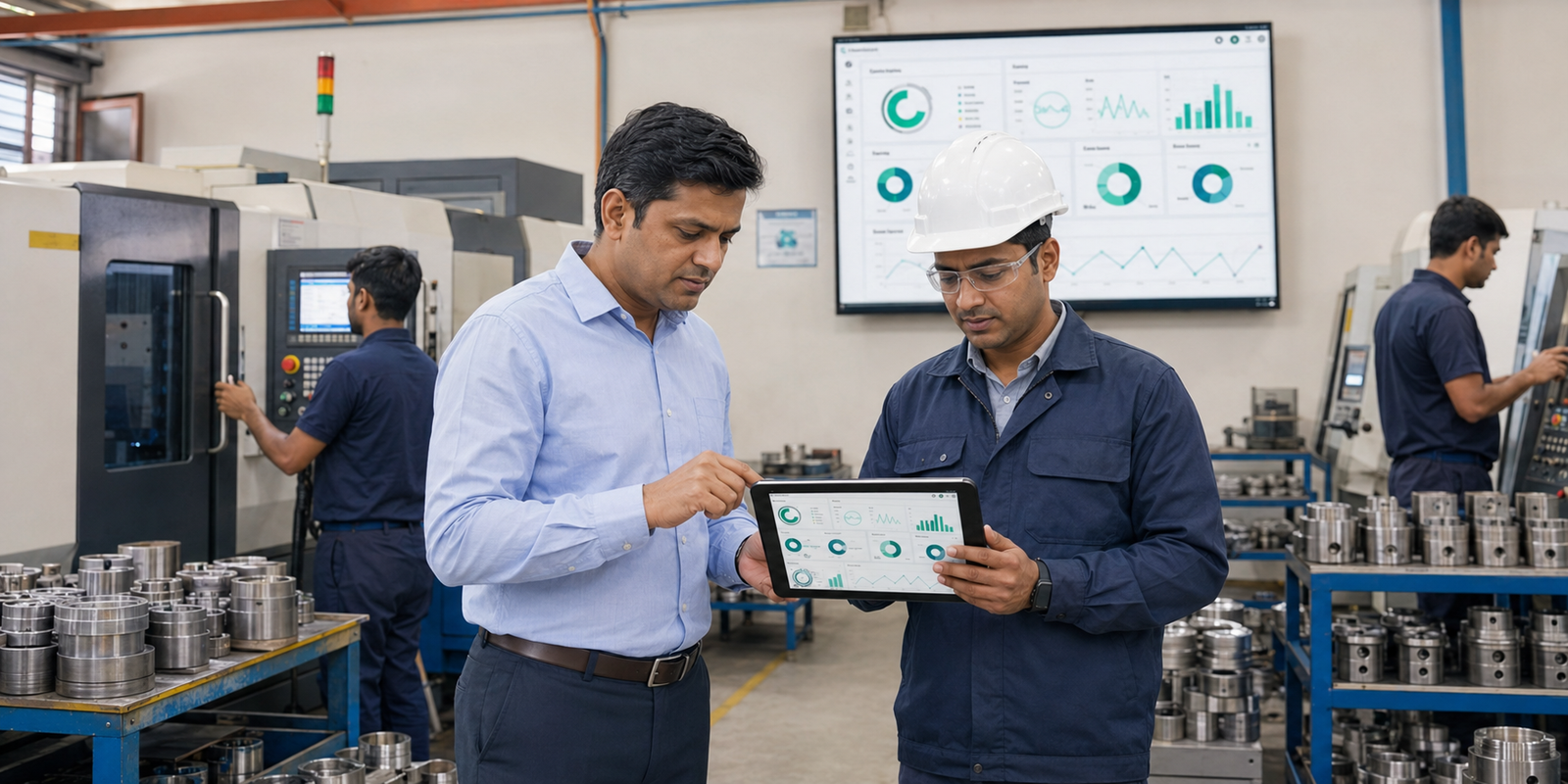
ERP Built for Indian Manufacturing SMEs
Manufacturing businesses run on machines, materials, and people, but most small and mid-sized plants in India still track these using a mix of spreadsheets, paper logs, and disconnected software. BeyondBoxAI's ERP for Manufacturing Industry brings production planning, asset upkeep, and plant maintenance into one system, so a shift supervisor, a maintenance engineer, and a plant manager are all looking at the same numbers.
This is not a generic ERP with manufacturing features bolted on. It is built around how Indian factories actually work — with machine downtime, spare parts stock, job cards, and compliance registers all needing to talk to each other. You can read more about how this fits into the wider sector on our Manufacturing industry page.
Production Planning Without the Guesswork
The system lets planners schedule production runs against machine and labour availability, track work orders from raw material issue through to finished goods, and flag delays before they cascade into missed deliveries. Instead of chasing updates over phone calls or WhatsApp, supervisors log progress directly against each job, and that data feeds straight into reporting.
Because production data sits alongside dispatch and inventory records, planners can see stock consumption and shortfalls in real time rather than at month-end reconciliation.
Asset and Plant Maintenance in the Same System
Unplanned breakdowns are one of the costliest problems on a shop floor. The ERP includes preventive maintenance scheduling for machines and utilities, maintenance history against each asset, and spare parts tracking so replacement stock doesn't run out unnoticed. This maintenance module is built on the same engine as our standalone Asset and Plant Maintenance product, so plants that later want a dedicated maintenance tool are not starting from scratch.
Maintenance requests, breakdown reports, and technician assignments are logged with timestamps, giving plant managers a clear record of which machines need attention most often — useful when planning capital expenditure or renegotiating annual maintenance contracts.
Compliance and Statutory Recordkeeping
Manufacturing units in India are subject to a range of statutory obligations around labour, safety, and taxation. While the ERP does not replace filing systems maintained with government bodies, it helps keep the underlying records — attendance, safety incidents, and vendor invoices — organised and auditable. Factories with obligations under the Directorate General FASLI safety norms, or those managing statutory dues through the Employees' Provident Fund Organisation, often find it easier to retrieve records when everything is stored against the same employee and asset IDs rather than scattered across departments.
Document versions for quality certificates, purchase orders, and machine manuals can be stored using the underlying Document Intelligence capability, making retrieval during audits faster than searching through physical files.
Connecting the Shop Floor to the Rest of the Business
Manufacturing doesn't stop at the factory gate. The ERP is designed to work alongside other BeyondBoxAI products used by manufacturing SMEs — workforce attendance and payroll through the Human Resource Management Solution, dealer and distributor coordination through the Dealer Management System, and vendor onboarding and invoicing through the Vendor Management System. Businesses that also need visibility into project timelines for capital projects or plant expansions can pair this with the Project Management System.
This modular approach means a plant can start with production and maintenance, and add HR, vendor, or CRM modules as the business grows, without re-platforming later.
Who This ERP Is For
The system suits discrete and process manufacturers — from component fabrication to food processing — that need production visibility and maintenance discipline without the cost or complexity of large-enterprise ERP platforms. It is built specifically for the operating realities of Indian SMEs, including variable power supply, multi-shift labour, and compliance with bodies such as the Ministry of Labour and Employment and tax filings tracked through the Goods and Services Tax portal.